Solo Rehearsal or Shared Run-Through? How Athletes Should Choose
Solo rehearsal or shared run-through? Choose the setting that sharpens individual attention, improves useful feedback, and prepares teammates to coordinate.
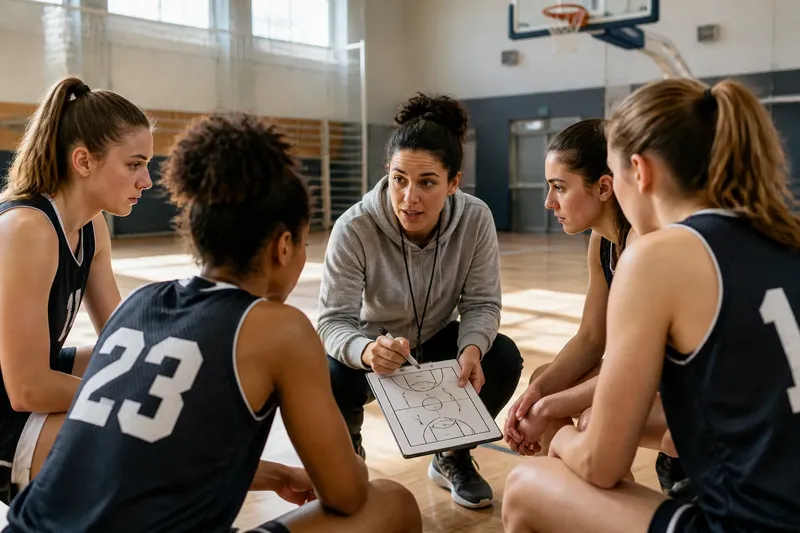
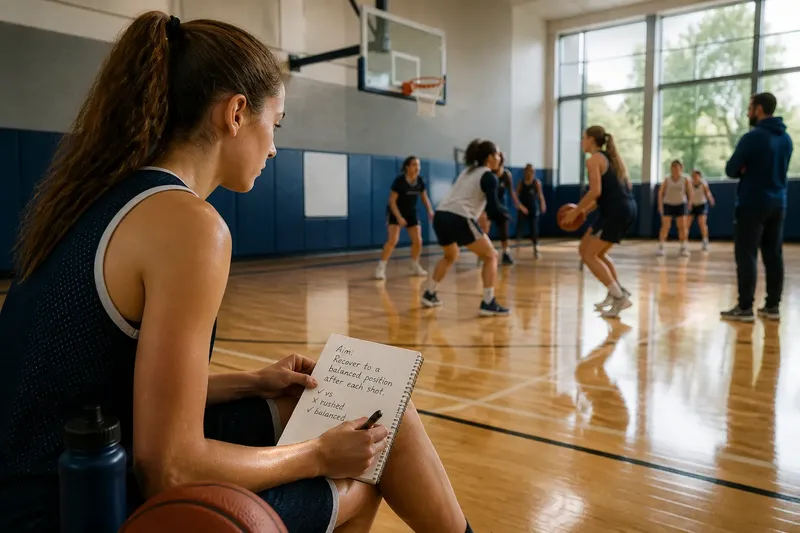
Solo rehearsal or shared run-through? The choice changes what an athlete can notice, what feedback is available, and how well teammates coordinate when a routine has to work as a group. Neither setting is the more serious one; they train different kinds of attention.
Use solo practice to hear your own timing and shared practice to test how your decisions meet other people’s. These seven distinctions can help you choose deliberately instead of treating every rehearsal as a smaller version of competition.
1. Solo practice makes your own signal easier to hear
When you rehearse alone, fewer moving parts compete for attention. A runner can listen for foot placement and breathing; a tennis player can repeat a serve while noticing the toss; a dancer can check whether a turn finishes in balance. The particular cue depends on the sport, but the advantage is the same: your own movement is less obscured by the group.
That clarity has a limit. An athlete may settle into a comfortable rhythm that depends on being unhurried, uninterrupted, and entirely in control of the space. Solo rehearsal is useful for examining a detail, not for deciding that the detail will hold up once other people enter the picture.
2. Shared run-throughs reveal timing between people
Group practice makes coordination visible. In a basketball drill, the passer and cutter must agree on when a lane opens; in a relay, the incoming runner’s approach has to meet the outgoing runner’s movement. A movement that looks clean alone can arrive too early, too late, or in the wrong place once a teammate’s action becomes part of it.
This is where shared repetition earns its time. Teammates can notice whether a handoff cue is clear, whether a formation closes too soon, or whether one person’s pace leaves another with no sensible option. A kitchen timer is useful for keeping a solo interval; it cannot tell two people that they keep reaching for the same doorway.
3. Feedback works best when its source fits the question
Alone, an athlete can use a mirror, a video clip, or a notebook to check a visible or repeatable detail. Video can show whether a hurdle approach drifts toward one side; a coach can then help distinguish an actual pattern from a camera angle or a single awkward repetition. Self-review is especially useful when the question is narrow enough to answer.
With others, feedback can include information a camera misses: a teammate’s view of spacing, the feel of a contact, or confusion about a call. Specific comments are easier to use than general verdicts. “I couldn’t see your signal before the switch” gives a teammate something to inspect; “that was messy” mostly gives everyone a mood.
4. Solo repetition supports concentration, but not every kind of concentration
Repeating a movement alone can make it easier to attend to one cue without the social demands of a group. An archer may rehearse a consistent setup; a goalkeeper may review footwork while a coach observes quietly. That reduced noise can be valuable when the task is to recognize what the body is doing.
Shared settings ask for a different skill: keeping attention on your own job while processing calls, movement, and changing space. Practicing only in calm conditions can leave an athlete surprised by ordinary team activity. The useful question is not which setting is quieter, but whether the upcoming task requires quiet concentration, flexible attention, or both.
5. Group practice can expose assumptions that solo work preserves
People often believe a cue is obvious because it is obvious to them. A player may think a raised hand means “switch,” while a teammate reads it as “hold.” A shared run-through brings such mismatches into view before they are hidden by speed or pressure.
Imagine a rowing pair rehearsing a transition. One rower expects a spoken count; the other expects the first blade movement to serve as the cue. If they practise separately, each may polish the same transition without noticing the disagreement. In a joint rehearsal, they can name one cue, repeat the transition, and observe whether both begin together. The useful outcome is not a perfect-looking run-through; it is a shared understanding they can carry into the next one.
6. Use the setting that matches the uncertainty
Before choosing, identify what you do not yet know. If the uncertainty concerns a personal movement, equipment adjustment, or sequence of decisions, a solo session may offer cleaner observation. If it concerns spacing, communication, role boundaries, or timing with another person, practise together.
- Choose solo rehearsal when you need to inspect a specific movement without group traffic.
- Choose shared practice when success depends on a teammate’s cue, timing, or position.
- Use video or coach observation when the detail is hard to notice while performing.
- Return to the group after an individual adjustment if other athletes must respond to it.
- Keep the cue for a rehearsal narrow enough that you can tell what changed.
These choices do not require separate, sealed-off sessions. An athlete might rehearse a difficult foot placement alone, then try it in a drill where a teammate provides the expected pass. The first setting helps inspect the movement; the second checks whether it fits the actual exchange.
7. A strong rehearsal lets people leave with a usable cue
End either kind of practice by naming what deserves attention next time. In solo work, that may be a body position or the point at which concentration slips. In shared work, it may be a verbal call, a spacing agreement, or the moment one athlete should yield to another.
Keep the cue concrete and brief. “Stay more connected” is difficult to act on; “call the screen before you move” gives the group something observable to try. The next rehearsal can then begin with a decision rather than a long reconstruction of what felt wrong.
Which rehearsal setting fits the question?
Should athletes always practise a skill alone before using it with teammates?
No. Some skills depend on another athlete from the start, such as a relay exchange or a paired defensive rotation. Begin in the setting that contains the information the skill needs, and isolate a component only when doing so makes that component easier to understand.
Can a solo session replace a shared run-through?
It can help prepare individual movements, but it cannot reveal how another person interprets a cue or occupies space. If coordination matters, the movement eventually needs a shared rehearsal.
When should a coach give feedback during group practice?
Give feedback when it can clarify a decision without obscuring what the group just experienced. A short pause after a confusing exchange may help; repeated commentary during every attempt can leave athletes listening for instructions instead of noticing timing.
How can a team make shared practice more useful?
Agree on one communication cue or coordination question before the run-through. Afterwards, ask whether teammates noticed the same event, then adjust the cue if their accounts differ.
Choose the rehearsal for the attention you need
Solo rehearsal or shared run-through is a practical choice about where useful information will come from. When the question belongs to one athlete, work alone long enough to inspect it; when the answer depends on another person, put the movement back into the group. That distinction keeps rehearsal focused without mistaking privacy for progress or activity for coordination.
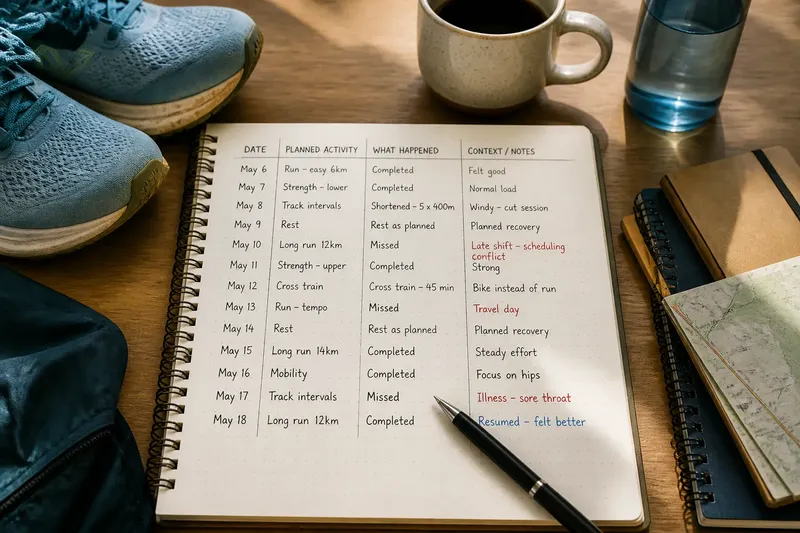
For the next session, write one question on a card and bring it to the setting best equipped to answer it. A card will not improve a handoff, serve, or formation by itself, but it can keep the rehearsal from wandering off to solve a different problem.