A Low-Key Show-and-Tell for Work in Progress
A low-key athletic show-and-tell helps you share unfinished work clearly, invite useful feedback, and leave with one manageable next decision.
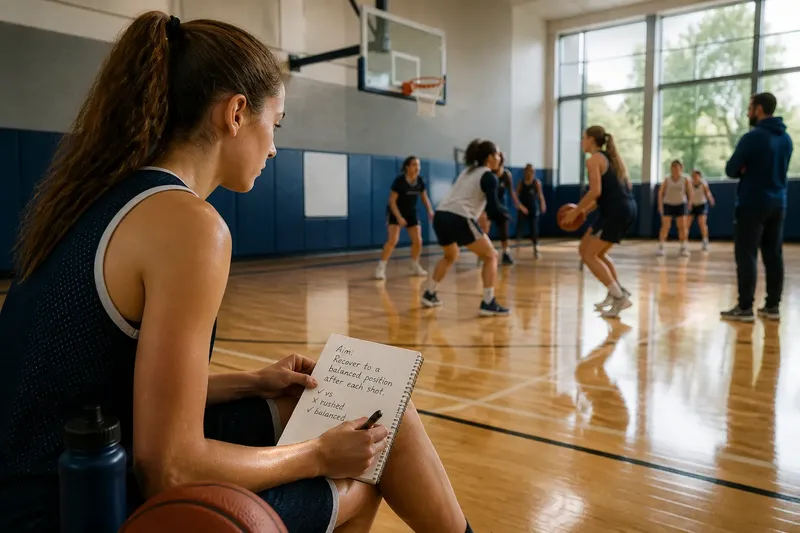
A low-key athletic show-and-tell works best when you bring one unfinished question, not a highlight reel. For a low-key athletic show-and-tell, a small audience can help you spot what is unclear, choose a useful adjustment, or explain what you are trying to do. The point is not to make the work look finished. It is to make the next part easier to see.
That sounds simple until the audience arrives, the session runs long, and someone asks whether you have considered a different sport. A useful gathering has a narrow purpose, enough context, and a question the group can answer. The problems tend to appear before the invitation, during the explanation, and after the feedback.
Choose one question before you invite anyone
A vague request such as “Can you tell me what you think?” gives listeners no way to tell whether you want encouragement, a technical observation, help with a decision, or an audience for a story. People respond with whatever comes to mind first, which may not be the thing you need.
Before sending an invitation, write one sentence naming the current question. It might concern the structure of a warm-up, the clarity of a race plan, or whether a practice drill helps you notice the skill you are trying to develop. Keep it to one question; a gathering does not become more useful by giving it several jobs.
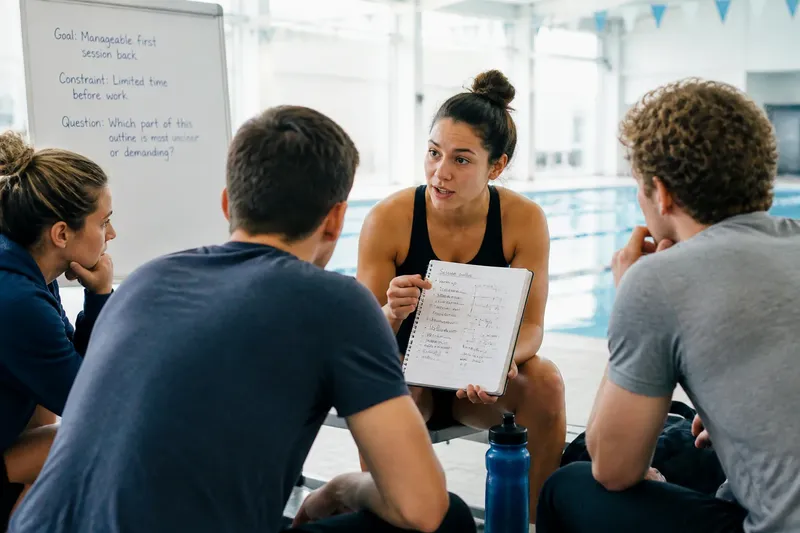
Say you are preparing to return to a recreational swimming group after a long break, and your draft session outline has a warm-up, several laps, and a technique drill. You want the first session to feel manageable. Invite three teammates to read the outline and identify the part that sounds most confusing or demanding. If they point to the same section, you have a specific place to review; if they find it clear, you can keep the outline and ask whether any essential detail is missing. Either result informs your decision without requiring you to accept every suggestion.
Make the invitation match the request. Tell people what you will show, what kind of response would help, and how much time you have set aside. A short note is enough: “I’m shaping a return-to-swimming session. Could you listen to the outline and flag one place where the plan is hard to follow?”
Give enough context without defending every choice
Presenting work without background can prompt broad questions and force you to explain every detail. Listeners cannot tell what matters, while you may hear each question as a request to justify the whole project.
Offer a compact frame before you show anything: the goal, the current stage, the constraint that matters, and the question for the group. For example: “I’m working on a more consistent opening to my solo run. This is a draft warm-up, I have limited time before work, and I’d like to know whether the sequence is easy to follow.” That gives people something concrete to respond to without turning the session into a defense hearing.
Choose material that shows the work in progress. A handwritten practice plan, a route sketch, a short audio note describing a movement, or a brief demonstration can be more useful than a polished slide deck. If you use video, explain what viewers should watch for and keep the clip tied to the question. A clip without a viewing prompt is like handing someone a map with the destination covered.
Share only the details that help the audience understand the current choice. If a constraint is private or irrelevant, leave it out; an unfinished project does not oblige you to disclose everything behind it.
Keep the group small enough for specific responses
A group larger or more varied than the question requires can make a gathering less useful. People may wait for a turn, perform for the room, or offer advice from a sport or level of experience that does not match yours. A large crowd also makes a simple follow-up feel like a panel discussion.
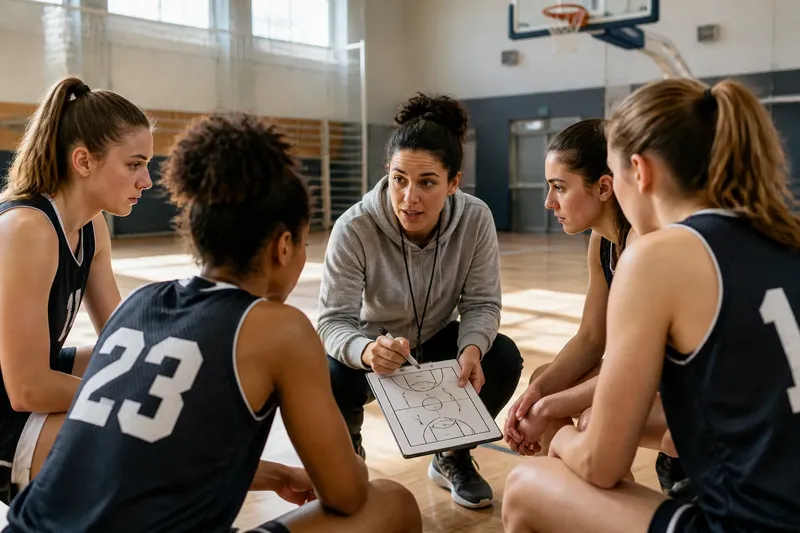
Invite people who can listen carefully and understand the setting. That might mean a training partner, a coach, a teammate who has faced a similar decision, or a friend who can tell you whether the explanation makes sense to a newcomer. Expertise helps with questions about technique or training decisions; a fresh listener helps you check whether your description is clear. One person does not have to serve both roles.
Set a simple boundary at the start: one response at a time, tied to the question, with advice offered only if you ask for it. This is not a rule against disagreement. It keeps disagreement connected to the work rather than to someone’s preferred training method.
Separate observations from a pile of advice
Even a focused request can produce a jumble: a useful observation, an unrelated story, a technical suggestion, and a recommendation to change the entire goal. Listeners often treat advice as the quickest way to contribute, while the athlete may feel pressure to accept each suggestion to seem receptive.
Separate what people noticed from what they recommend. Ask, “What in the outline made that part seem unclear?” or “Which moment led you to that suggestion?” A specific observation gives you something to examine; a proposed solution is only one possible response to it.
When feedback drifts, restate the question without scolding anyone. “That is useful background. For today, I’m trying to understand whether this sequence is clear to someone who has not seen it before.” If the group keeps moving into another topic, note it for a separate conversation.
Say what kind of feedback you are not seeking. If you want reactions to how a practice outline reads, make clear that you are not asking the group to redesign your training plan. If you want to know whether a goal sounds understandable, explain that you are not asking for a judgment on whether to pursue it. A boundary makes the request more precise, not less generous.
What should you bring to a work-in-progress session?
How finished should the material be?
Bring enough to make the current decision visible, but not so much that people assume you are presenting a final result. A rough outline, annotated notebook page, or short demonstration can work if you explain what remains undecided.
How do you ask for feedback without inviting a full redesign?
Name the one response you want and give a concrete prompt, such as “Which instruction is hardest to picture?” Avoid asking for general opinions if you are not prepared to sort unrelated suggestions.
What if the audience has more experience than you?
Ask people to describe what they observed before offering a solution. You can value their experience and still decide that a suggestion does not suit your goal, schedule, or current level.
What if nobody has anything useful to say?
Ask a narrower question tied to something visible: which phrase is unclear, where attention wandered, or what detail they need to understand the plan. If the audience still has no response, the prompt or material may need revision; that does not mean the work has failed.
Close with a decision, not a verdict
A low-key show-and-tell can end with the conversation finished but the next move unclear. Some athletes try to solve that discomfort by making a firm promise on the spot. Others leave with a notebook full of comments and no way to sort them. Neither response is required.
Before everyone leaves, say what you heard and what you intend to consider. Separate a possible next action from an obligation: “I’m going to revise the opening instructions and see whether the order still fits the session.” That is a modest decision, not a claim that the group has settled the project.
- Check whether each note answers the original question; if it does, keep it for consideration, and if it does not, set it aside or save it for another conversation.
- Check whether a comment describes something observed or recommends a change; if it describes an observation, record it separately, and if it is a recommendation, assess it against your goal before acting.
- Check whether a suggestion fits your current goal and constraints; if it does, consider one small revision, and if it does not, leave the draft unchanged or seek a more suitable perspective.
- Check whether several listeners noticed the same unclear instruction; if they did, revise that instruction, and if they did not, ask a narrower question or keep the wording for now.
- Check whether the feedback leaves a specific question unresolved; if it does, arrange a separate conversation with someone suited to that question, and if it does not, move on without adding another meeting.
- Check whether a proposed training change touches on injury, medical care, or a demanding change in training; if it does, consult a qualified professional before acting, and if it does not, decide whether it fits your own plan and circumstances.
You do not have to adopt a suggestion because it was offered kindly, and you do not need to defend a decision that is still taking shape. When feedback touches on injury, medical care, or a demanding training change, consult a qualified professional rather than treating a small-group discussion as an expert assessment.
The practical value of a low-key athletic show-and-tell is often modest: one confusing instruction becomes clear, one assumption gets noticed, or one next decision becomes easier. Keep the audience small and the question visible, and let the work remain unfinished. Sometimes the useful result is a revised notebook page, not a standing ovation; the notebook is usually easier to carry home.